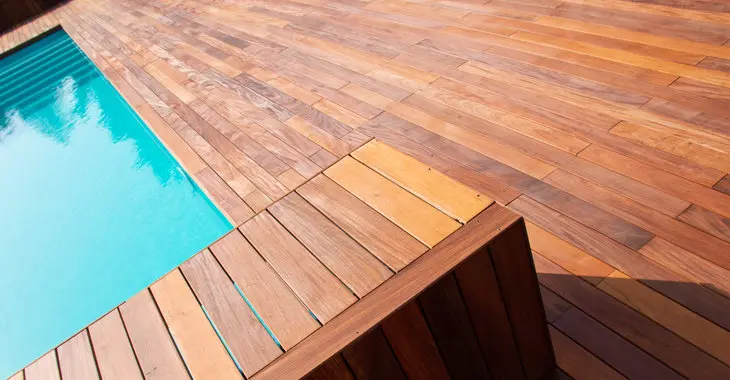
Ipe (pronounced “ee-pay”), also known as Brazilian Walnut, is a dense tropical hardwood sourced primarily from Central and South America. Botanically classified as Handroanthus spp. (formerly Tabebuia), ipe has long been the benchmark for high-performance outdoor decking. Its natural oils, tight grain and exceptional hardness make it one of the most durable wood species available for exterior applications.
Properly maintained ipe decking lasts 25–40 years or more. Many municipal boardwalks and commercial docks built with ipe in the 1980s remain structurally sound today. The wood’s natural extractives — including tannins and oils — provide built-in resistance to rot, mold and insects without pressure treatment.
Ipe has a low coefficient of shrinkage and swelling compared to domestic hardwoods. This minimises gapping, cupping and warping — common issues with less dense species like pine or cedar. Boards remain flat and tight season after season in most climates.
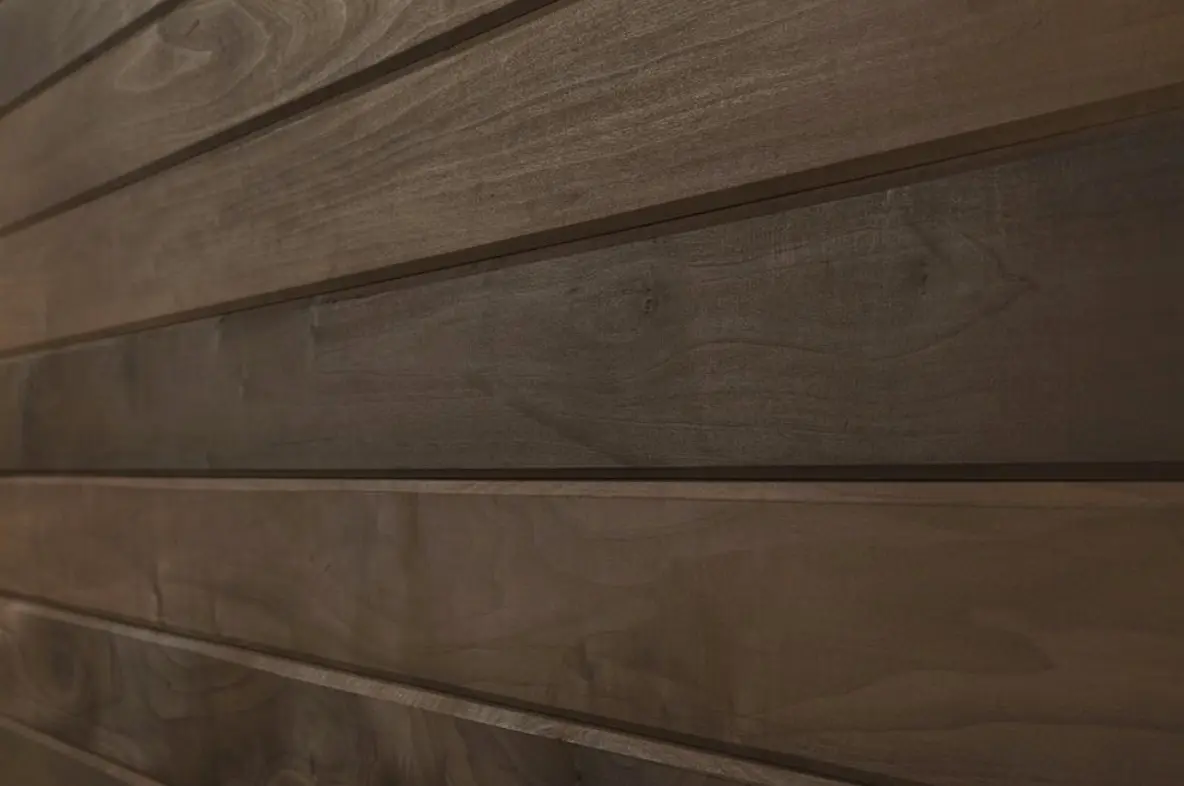
Fresh ipe ranges from olive-brown to dark chocolate-brown with fine, interlocking grain. Over time, without oiling, the surface transitions to an even silver-grey patina — a natural weathering process that does not affect structural integrity. Regular application of ipe oil preserves the original warm-brown colour.
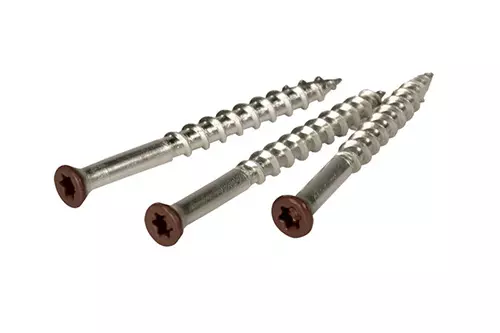
Ipe’s density makes it challenging to work with standard woodworking tools. Carbide-tipped saw blades are required, and pre-drilling is mandatory for every fastener to prevent splitting. The silica content in the wood blunts standard drill bits quickly — using titanium or cobalt bits extends tool life.
Ipe is priced significantly higher than pressure-treated lumber — typically $8–$15 per linear foot for standard decking profiles, depending on grade and supplier. However, the 30+ year lifespan and near-zero maintenance costs (compared to annual staining of softwood decks) often make the long-term cost per year competitive.
Ipe’s popularity has raised valid concerns about overharvesting in tropical forests. When purchasing, look for FSC (Forest Stewardship Council) certification to ensure the timber originates from responsibly managed sources. Reclaimed ipe is another environmentally sound alternative that also tends to be more dimensionally stable due to prior drying.
Unlike composite decking, ipe requires periodic maintenance. Applying ipe-specific penetrating oil once or twice per year — particularly in UV-intensive or coastal climates — maintains the wood’s colour and surface integrity. If left untreated, the grey patina is harmless but may be undesirable aesthetically.
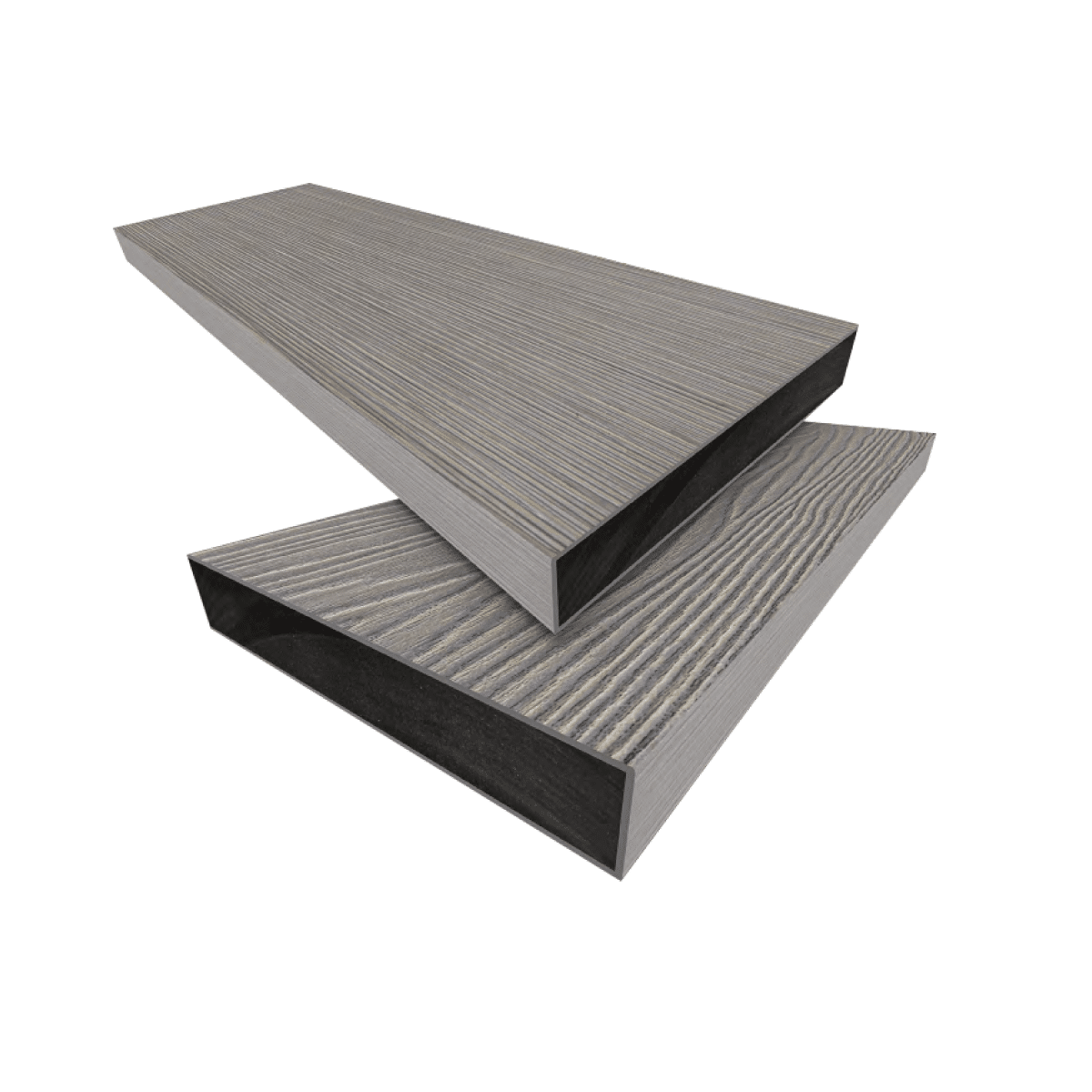
Compared to composite decking (WPC), ipe offers a natural feel underfoot, higher fire resistance and a longer potential lifespan, but requires more maintenance and specialist installation. Against pressure-treated pine, ipe outperforms on every durability metric at higher upfront cost. Other tropical hardwoods — teak, cumaru, garapa — offer similar profiles; teak has comparable durability with better workability but at higher cost; cumaru (Brazilian Teak) is a common budget alternative to ipe with slightly lower hardness (3,540 lbf Janka).
Yes — ipe is one of the best-performing natural wood species for outdoor decking in terms of hardness, fire resistance, decay resistance and longevity. It is the correct choice for high-traffic decks, commercial boardwalks, pool surrounds and coastal environments where performance and durability are the primary criteria. The trade-offs are a higher initial cost, demanding installation (mandatory pre-drilling, carbide tooling) and the need for annual oiling to maintain colour. For homeowners or specifiers prioritising minimum maintenance above all else, a co-extrusion WPC deck or a composite-capped board may be a more practical alternative. For those willing to invest in installation and periodic care, ipe delivers a level of performance and natural aesthetics that synthetic materials rarely match.