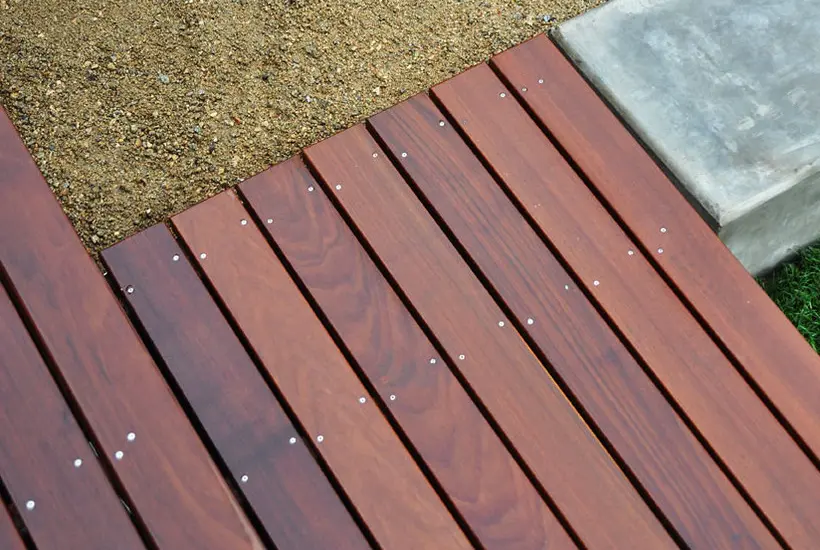
Cumaru and ipe are both tropical hardwoods harvested primarily in South America and widely used for exterior decking, siding, and structural applications. Both species outperform most softwoods and pressure-treated lumber in density, natural durability, and lifespan. However, there are meaningful differences between them in hardness, workability, price, and sustainability that should inform your choice.
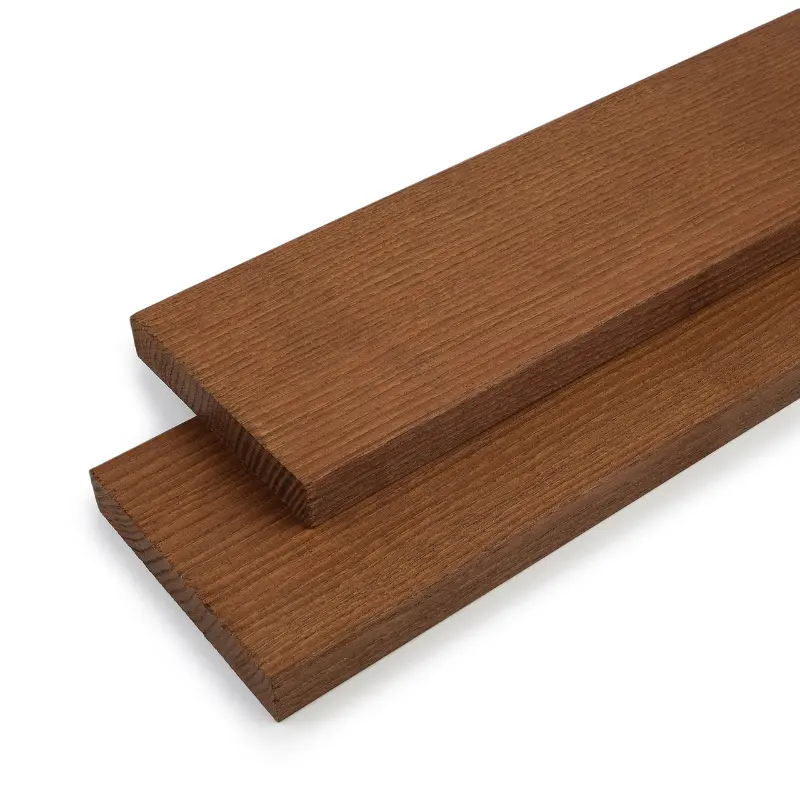
Ipe (Tabebuia spp., also called Brazilian Walnut or Ironwood) is often considered the benchmark of tropical hardwood decking. It has a tight grain, rich brown coloring with olive undertones, and an exceptionally smooth surface when properly milled. Ipe has been the dominant species in commercial boardwalk construction in the United States and Europe for decades.
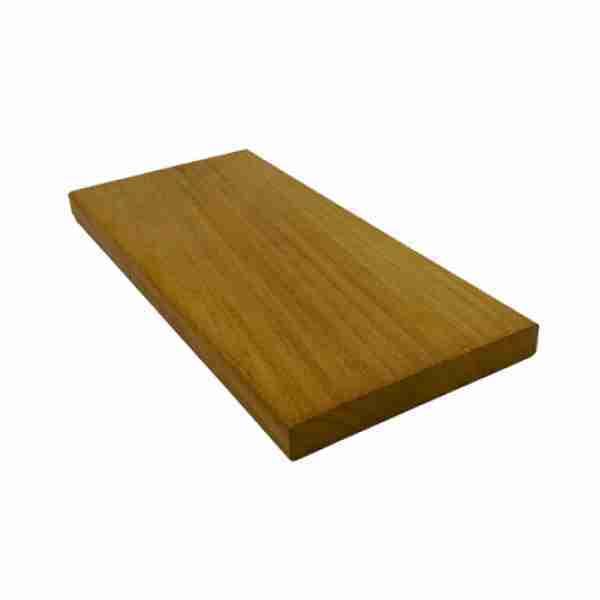
Cumaru (Dipteryx odorata, also called Brazilian Teak or Tonka Bean) is sometimes marketed as a direct ipe alternative. It has a similarly high density, warm reddish-brown to tan coloration with interlocked grain, and a natural oily content that provides self-protective qualities.
Janka hardness measures the force required to embed a steel ball to half its diameter into the wood surface — a standard proxy for wear resistance and durability under foot traffic.
In practical terms, the difference in hardness between the two species is negligible for decking purposes. Both are highly resistant to denting, scratching, and surface wear under normal residential and commercial use. Both exceed 50 lbs/ft³ in air-dry density, which means they will not float in water — a reliable indicator of natural decay resistance.
Both cumaru and ipe are rated as Class I (most durable) for natural resistance to decay, insects, and fungal attack. This is the highest durability classification and means the wood contains natural compounds that resist biological degradation without the need for chemical treatment.
Expected lifespan without staining:
Ipe edges out cumaru in raw durability, particularly in ground-contact situations or high-humidity environments. However, with proper maintenance (annual oiling), cumaru easily achieves 25+ years of service life in typical above-ground decking applications.
Both species are dense enough to require pre-drilling for fasteners — skipping this step will split the board and strip screw heads. This adds time and labour cost compared to softer materials, but is standard practice for any tropical hardwood installation.
Ipe has a very tight, consistent grain, which makes it dimensionally stable and predictable to work with. The high silica content dulls saw blades faster than most woods — carbide-tipped blades are mandatory, and they will need replacement more often than with softer species. Ipe’s natural oils can interfere with glue adhesion and some finishes.
Cumaru has an interlocked grain that can cause tearout on planers and jointers if not fed in the correct direction. It is slightly easier to cut than ipe due to marginally lower density, but the interlocked grain requires careful attention to grain direction when machining. Like ipe, it contains natural oils and requires pre-drilling for fasteners.
Ipe is typically a medium to dark brown with olive and reddish undertones. The grain is straight and fine, giving a formal, refined appearance. It is one of the most visually consistent tropical hardwoods.
Cumaru is lighter — ranging from warm tan to reddish brown — with more visible grain variation and occasional figure. This gives cumaru a slightly more natural, less uniform look compared to ipe. Some buyers prefer the warmer tone; others prefer ipe’s darker, richer appearance.
Both species will silver-grey naturally over time if left untreated with UV-protective oil. This is a purely aesthetic change — the silvering does not affect structural integrity. To maintain the original colour, apply a penetrating hardwood oil with UV blockers once a year.
Ipe commands a consistent price premium over cumaru due to higher demand, name recognition, and stricter supply constraints.
For a typical 400 sq ft deck, cumaru can represent a savings of $800–$2,000 in material costs compared to ipe — a significant difference that makes it attractive for budget-conscious projects where top-tier performance is still required.
Both ipe and cumaru are tropical species harvested primarily in Brazil, Peru, and Bolivia. Both are subject to logging pressure, and sustainability depends heavily on the specific source and chain of custody. When purchasing either species, look for:
Cumaru is currently under less regulatory scrutiny than ipe at the international trade level, which makes sourcing slightly more straightforward — though this does not inherently mean it is harvested more responsibly. Always verify FSC certification regardless of species.
Choose ipe if: you want the highest available durability rating, you are building a commercial boardwalk or high-traffic application, you prefer a darker and more uniform appearance, and budget is secondary to material performance.
Choose cumaru if: you want comparable natural durability at a meaningfully lower price point, you prefer a warmer and slightly more varied grain pattern, and you are building a residential deck or outdoor living space where the marginal performance difference between the two species will not be perceptible in use.
Both cumaru and ipe will outlast pressure-treated pine, composite decking, and most domestic hardwoods under the same conditions. For most residential projects, cumaru offers the better value proposition: equivalent durability class, similar maintenance requirements, and a 20–30% lower material cost. For commercial or prestige applications where maximum longevity and ipe’s documented track record matter, ipe remains the industry standard.